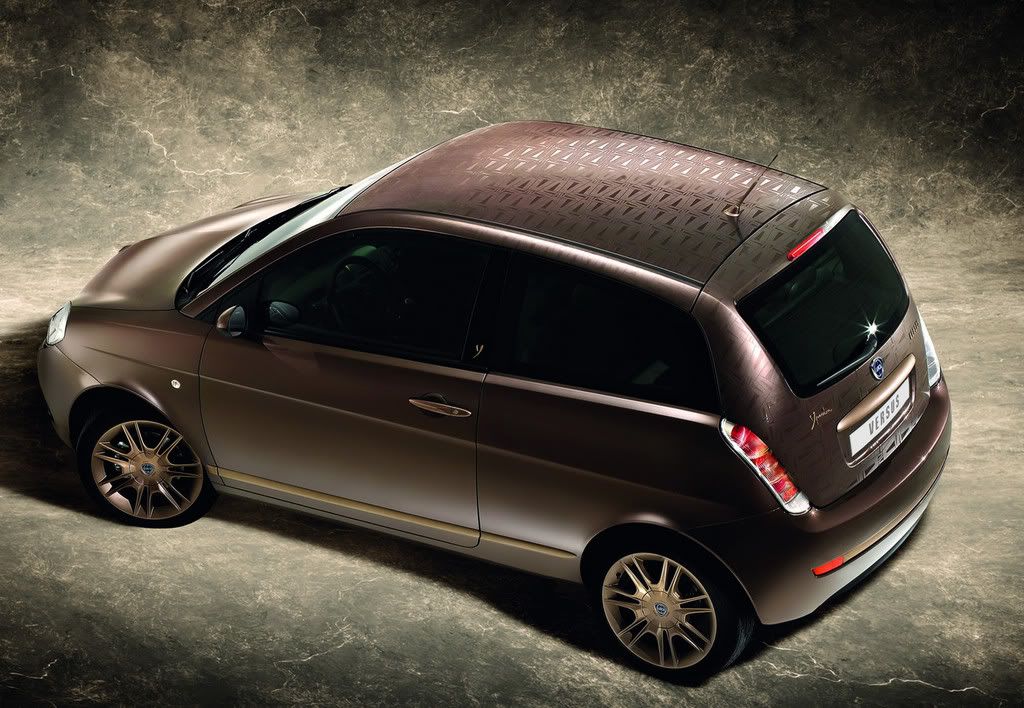
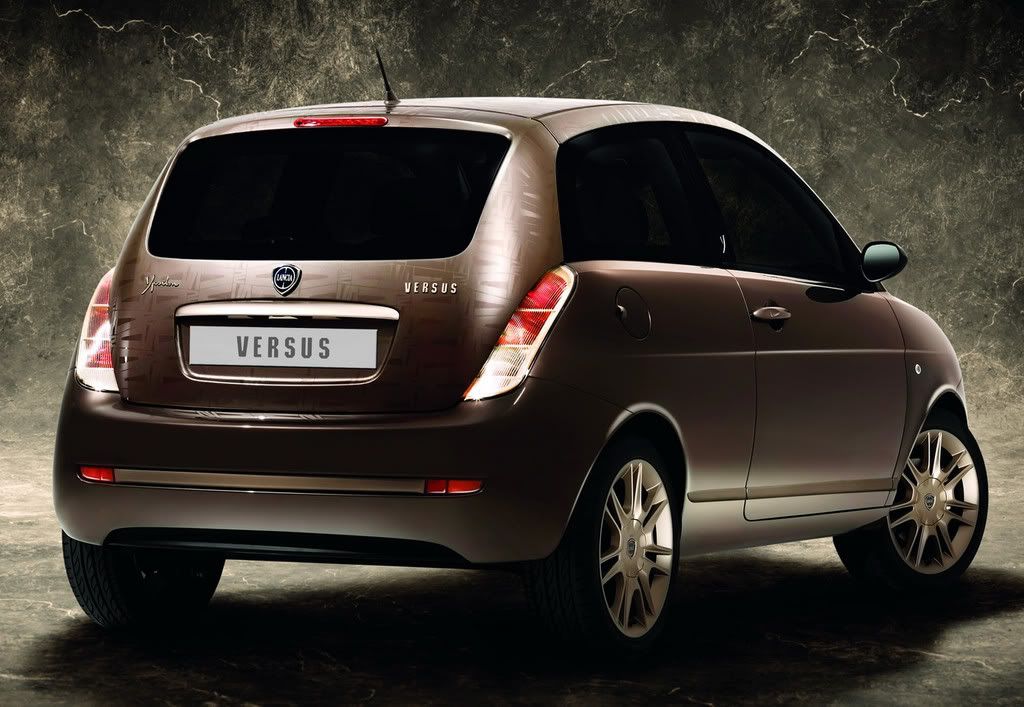
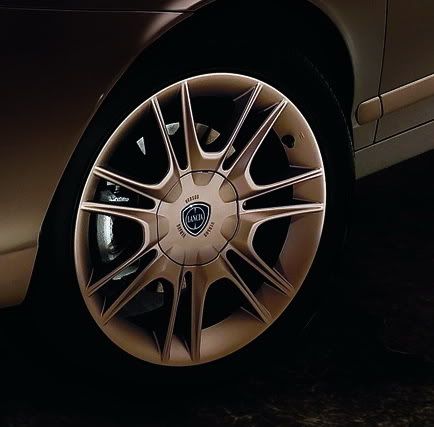
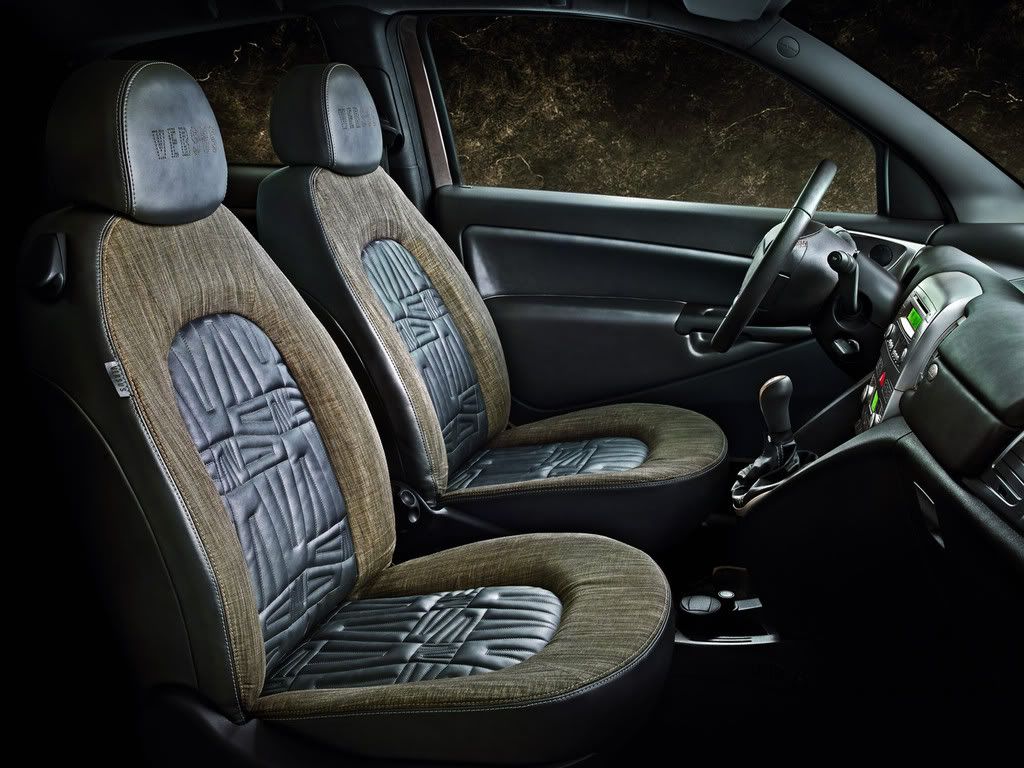
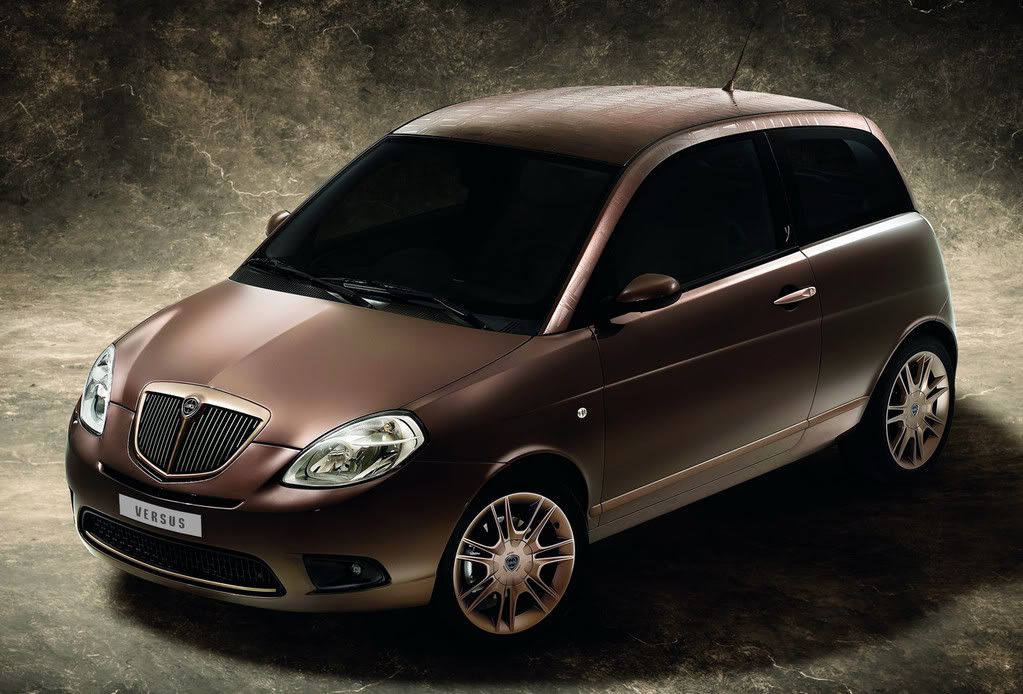
However for the interior, the interior boasts a special upholstery with a �Versus� logo heat-printed in relief that recalls the world of fashion wile the head restraints. VERSUS logo is adorned to the dashboard and the door panels.
Monday, September 22, 2008
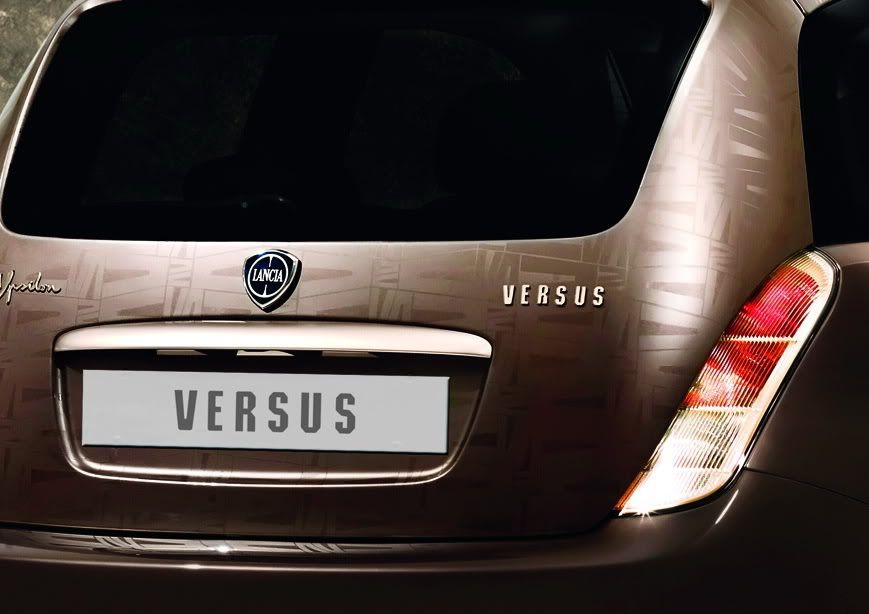
Lancia Ypsilon VERSUS
However for the interior, the interior boasts a special upholstery with a �Versus� logo heat-printed in relief that recalls the world of fashion wile the head restraints. VERSUS logo is adorned to the dashboard and the door panels.
Saturday, December 8, 2007
2010 Ford Mustang
The new Mustang looks to be changed around the front and rear fascias, while also boasting an upgraded interior. Speculation still rages as to the extent to which the Guigiaro Mustang concept from the 2006 Los Angeles Auto Show is being used in the formation of this car (though the rims look undamaged). We can�t really see it from these images, but who knows?
Check out AmericanMuscle.com and their line of 2010 Ford Mustang Parts.2010 Ford Mustang
The new Mustang looks to be changed around the front and rear fascias, while also boasting an upgraded interior. Speculation still rages as to the extent to which the Guigiaro Mustang concept from the 2006 Los Angeles Auto Show is being used in the formation of this car (though the rims look undamaged). We can�t really see it from these images, but who knows?
Check out AmericanMuscle.com and their line of 2010 Ford Mustang Parts.Ford�s Kuga
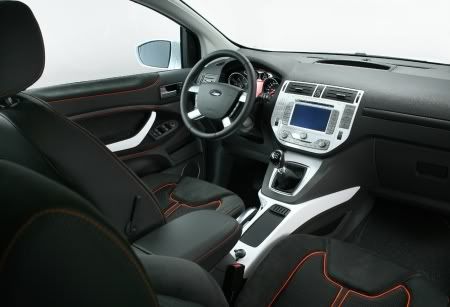
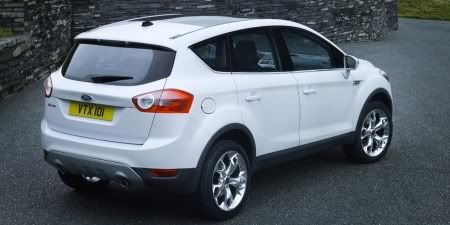
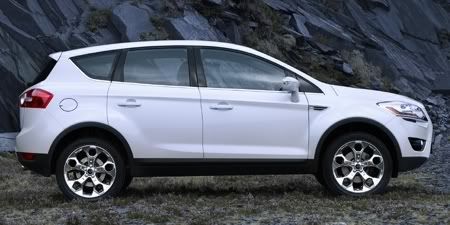
We�re still not sure why Ford won�t bring the Kuga to the U.S. That 2.0-liter diesel engine and all-wheel drive would be a great combination for U.S. drivers who want the security of all-wheel drive and some better fuel economy than products like the Edge or Escape currently offer.
Europeans will begin taking delivery of this handsome CUV in 2008. We�re happy this vehicle will head to production virtually unchanged from the vehicle shown at Frankfurt. The looks are hip and it certainly looks like it belongs in Ford�s European portfolio.
Ford�s Kuga
We�re still not sure why Ford won�t bring the Kuga to the U.S. That 2.0-liter diesel engine and all-wheel drive would be a great combination for U.S. drivers who want the security of all-wheel drive and some better fuel economy than products like the Edge or Escape currently offer.
Europeans will begin taking delivery of this handsome CUV in 2008. We�re happy this vehicle will head to production virtually unchanged from the vehicle shown at Frankfurt. The looks are hip and it certainly looks like it belongs in Ford�s European portfolio.
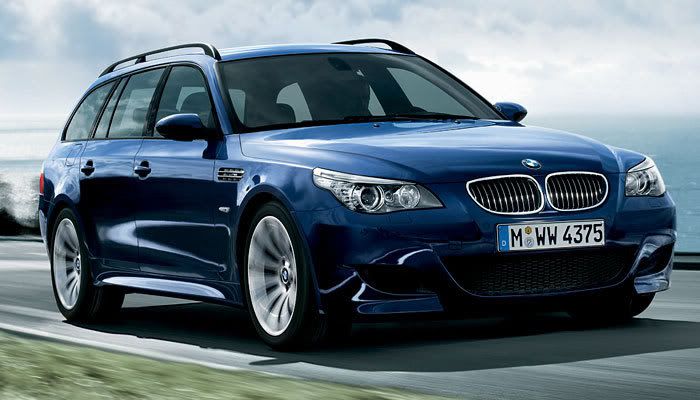
Is this a Turbocharged BMW M5?
Small changes to the front fascia, exhaust, and the rear bumper indicate something is different with this M5 wagon. We�re hoping the rumors are correct and that this car will come to market with 600 horsepower under the hood.
Is this a Turbocharged BMW M5?
Small changes to the front fascia, exhaust, and the rear bumper indicate something is different with this M5 wagon. We�re hoping the rumors are correct and that this car will come to market with 600 horsepower under the hood.
Saturday, November 10, 2007
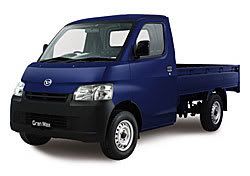
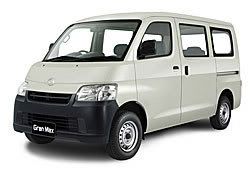
Daihatsu Launches Light Commercial Vehicle "Gran Max" in Indonesia
The "Gran Max" will be produced at P.T. Astra Daihatsu Motor (ADM), which is Daihatsu's production base in Indonesia, and will be sold through P.T. Astra International (AI).
Light commercial vehicle users will have a choice between two models of the "Gran Max", the pick up truck and the minibus. The monthly sales target for both models is 2,300 units and the manufacturer's suggested retail prices range between 67 million and 97 million rupiah (approximately 800,000 to 1.2 million yen).
In conjunction with the increasing demand for light commercial vehicles in Indonesia, Daihatsu plans to install a second production line at ADM to increase annual production capacity (based on no-overtime 2-shift operations) from 150,000 vehicles to 200,000 vehicles level by the end of 2007.
| The main features of the "Gran Max" include: | ||||||||||||
Features common in either a pick up truck or minibus
Minibus feature
|
Daihatsu Launches Light Commercial Vehicle "Gran Max" in Indonesia
The "Gran Max" will be produced at P.T. Astra Daihatsu Motor (ADM), which is Daihatsu's production base in Indonesia, and will be sold through P.T. Astra International (AI).
Light commercial vehicle users will have a choice between two models of the "Gran Max", the pick up truck and the minibus. The monthly sales target for both models is 2,300 units and the manufacturer's suggested retail prices range between 67 million and 97 million rupiah (approximately 800,000 to 1.2 million yen).
In conjunction with the increasing demand for light commercial vehicles in Indonesia, Daihatsu plans to install a second production line at ADM to increase annual production capacity (based on no-overtime 2-shift operations) from 150,000 vehicles to 200,000 vehicles level by the end of 2007.
| The main features of the "Gran Max" include: | ||||||||||||
Features common in either a pick up truck or minibus
Minibus feature
|
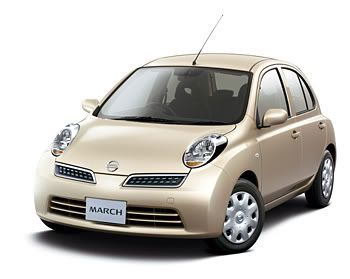
NISSAN RELEASES THREE MARCH 25TH ANNIVERSARY MODELS
The March 25th Happiness, based on the March 12S and 14S FOUR models, comes in an exclusive Silky Beige body color. Interior-wise, the model features an odor-absorbing headliner, automatic interior lighting system and other additional equipment options, offering customers' greater value.
Based on the March 25th Happiness (2WD/4WD), 12E and 14E FOUR models, the March Plus Safety is fitted with a host of features for enhanced occupant safety, including SRS side airbags for the driver and front passenger, SRS curtain airbag and Xenon headlamps (low beam with an automatic levelizer).
The March KISEKAE, based on the March 12S and 14S FOUR models, offers a choice of two exclusive seat covers - Bubbly or Striped* - to suit the individual styles of the customer. The model offers exclusive interior trims and pedals to match the seat upholstery. True to its name, the March KISEKAE (meaning "dress up" in Japanese) allows customers to customize the interior such as the seat covers, according to their personal tastes.
NISSAN RELEASES THREE MARCH 25TH ANNIVERSARY MODELS
The March 25th Happiness, based on the March 12S and 14S FOUR models, comes in an exclusive Silky Beige body color. Interior-wise, the model features an odor-absorbing headliner, automatic interior lighting system and other additional equipment options, offering customers' greater value.
Based on the March 25th Happiness (2WD/4WD), 12E and 14E FOUR models, the March Plus Safety is fitted with a host of features for enhanced occupant safety, including SRS side airbags for the driver and front passenger, SRS curtain airbag and Xenon headlamps (low beam with an automatic levelizer).
The March KISEKAE, based on the March 12S and 14S FOUR models, offers a choice of two exclusive seat covers - Bubbly or Striped* - to suit the individual styles of the customer. The model offers exclusive interior trims and pedals to match the seat upholstery. True to its name, the March KISEKAE (meaning "dress up" in Japanese) allows customers to customize the interior such as the seat covers, according to their personal tastes.
Wednesday, October 24, 2007
NISSAN ANNOUNCES NEW NISSAN GT-R
TOKYO (Oct. 24, 2007) - Nissan Motor Co., Ltd., today announced the launch of the Nissan GT-R, a new multi-dimensional performance machine that lives up to the concept of "an ultimate supercar for anyone, anywhere, at anytime". The Nissan GT-R features a newly developed Premium Midship package, including the world's first independent transaxle 4WD developed independently by Nissan. The Nissan GT-R will be available in Japan mainly through Nissan High Performance Centers nationwide from December 6th.The Nissan GT-R was developed with a new understanding and appreciation of the Earth's natural forces - gravity, inertial force and aerodynamics - and translates those forces into a completely new design, maximizing tire grip and airflow.
Basic vehicle dynamics and integration with the driver have also been examined, resulting in new componentry and creating a Human-Machine Interface (HMI) never seen before in the marketplace. All of these theories have been integrated to balance "speed and efficiency," "high-output with environmental consideration" and "high performance and safety."
Taking these factors into account, Nissan created the all-new Nissan GT-R, which offers advanced high performance for secure and enjoyable driving by minimizing the effects of climatic, road condition or driving technique limitations. The Nissan GT-R offers ultimate performance for virtually every driving situation - whether it be the Nurburgring circuit, to snow, rain or urban areas - all manageable by the GT-R driver through advanced technology and driving dynamics.
The Nissan GT-R's unique characteristics are instilled not just in the vehicle's design, but also through a specialized production process. Carbon fiber, aluminum and steel components are assembled with a special high-precision process, which includes a series of vibration tests. Engines and transmissions are assembled by a single craftsman in a "clean room" environment and upon completion, every GT-R undergoes a battery of comprehensive tests to ensure the proper operation of all vehicle components.
To properly support the all-new GT-R, Nissan has established special Nissan High Performance Centers, where all certified advisors and technicians have received extensive training. Total support for the GT-R owner is offered for the first three years of ownership, including measurement and adjustment of the engine, transmission and wheel alignment after the first 1000 km, and again every 12 months, free of charge.
Packaging and Driveline Suited for a Supercar
The all-new Nissan GT-R uses a Premium Midship package, an all-new, more advanced version Front Midship (FM) package utilized on other Nissan vehicles. This new package enables the use of the world's first application of an independent transaxle 4WD system. The transaxle's layout places the dual-clutch transmission, transfer case and final drive at the rear of the vehicle (instead of the usual front location), which enables vehicle weight to be evenly distributed throughout the car. This gives the Nissan GT-R a superb front-to-rear weight balance, while enhancing leg and foot space and allowing for an optimal pedal layout.
Under the hood, the Nissan GT-R features an all-new 3.8-litre twin turbo V6 "VR38" engine, featuring plasma-sprayed bores and a special twin-turbo exhaust manifold system. A secondary air management system enables the newly designed powerplant to provide approximately 40kg/m of torque during ordinary low-rev driving, which gives an optimum air-fuel ratio for around-town efficiency and helps the Nissan GT-R meet ultra-low emission vehicle (U-LEV) standards in Japan.
The Nissan GT-R's new engine produces 480PS (353kW) at 6400rpm and maximum torque of 60kgm (588Nm) from 3200 to 5200rpm. Putting the power to the ground is an all-new GR6-type dual clutch transmission, with paddle shifting and a Borg Warner six-plate dual clutch for direct control.
Suspension duties are handled through a special Bilstein DampTronic*1 system, which utilizes all pertinent vehicle information to provide appropriate damping forces for all situations and helps maintain a high level of control for straight-line driving, cornering, and braking.
Braking is essential for a daily-driven supercar and the GT-R features large Brembo full-floating drilled rotors, low steel high stiffness brake pads and Brembo mono block six-piston front and four-piston rear calipers, which in combination minimize fade and provide stable braking. Run-flat tires, exclusively designed for use on the Nissan GT-R, balance high grip and all-weather capabilities and a comfortable ride in all driving situations. The tires are designed to maintain structure for 80km of travel at 80 km/h, while still providing an acceptable level of performance.
High-Performance Safety and Environmental Technologies
The Nissan GT-R offers a long list of safety and environmental features, including, for enhanced visibility inside and out of the vehicle, high-mounted LED stoplamps, bright LED rear combination taillights, "super wide beam" headlights, heated door mirrors and flat-blade wipers.
Standard safety equipment includes a pop-up engine hood system for enhanced pedestrian safety, driver and front passenger SRS Air Bag System, ELR front seat belts with tension reducer, front seat belts with load limiter, and three-point ELR rear seat belts. Driver and front passenger SRS Side Air Bag System and SRS Curtain Air Bag System are offered as options.
Environmental technologies include extensive work to create an U-LEV certification in Japan for the 3.8-liter twin turbo engine and reduced levels of volatile organic compound for materials used in the car.
Functional Design - High Performance Aerodynamics and Style
The Nissan GT-R's styling follows the function over form theory. Every styling aspect, from the overall design to the smallest details, is created to maximize the vehicle's driving experience - as well as suggesting GT-R's "supercar" level of performance. Utilizing advanced aerodynamics, the Nissan GT-R's aggressive styling evokes the lines of a well-trained athlete, combining strong character lines with smooth and solid areas.
The all-new GT-R's body is created with a combination of steel, carbon fiber and aluminum, providing a unique combination of stiffness and lightness. The Nissan GT-R features a low coefficient of drag of 0.27, with high front and rear downforce, which provides the GT-R with enhanced grip in all weather situations, while also enhancing fuel efficiency.
The front fenders express power and stability, while the "aero-blades" on the fenders' leading edges provide optimum airflow around the tires and along the body. The scoop in the fenders' trailing edges assists in providing front downforce and optimization of side airflow. The aggressive front end, with a large hood budge and single air intake, provides a sophisticated style as well as undisturbed airflow for power and cooling. New "super wide beam" headlights feature three additional sub-reflectors (compared to conventional lights) to give a wider spread to the illumination area.
The Nissan GT-R's large, four-passenger cabin features a sloping "aero blade canopy" roofline and curved C-pillar "sword edge," which expresses the distinctive GT-R identity, as well as facilitating air flow around the rear of the vehicle. The GT-R's hallmark four-ring taillights, efficient rear spoiler and large, integrated f120 exhaust tips, provides the signature rear view of the GT-R, as well as optimizing airflow along the top and under the vehicle.
The high level of advanced technology is evident even in the Nissan GT-R's paint - which utilizes a "double clear coat" and "anti-chipping" process. The Nissan GT-R features Ultimate Silver as a special new color, which is painstakingly hand-polished by craftsman.
An Interior Suitable for Daily Driving or Supercar Duties
Key to the Nissan GT-R's usability as a both daily driver and a high-performance supercar is its interior, which is designed to balance functionality, a sense of ease, and comfort.
Sculpted performance bucket seats give the driver and passenger a comfortable driving experience, and soft pads are utilized on the dash in front of the passenger and doors to give an extra level of comfort and safety.
The instrument panel surrounds the driver, with all meters and multi-function meter at a uniform height to minimize the driver's head movement when traveling at high speeds. A large center-mounted tachometer, with gear display on its upper right, as well as the easy-to-read graphics of the display, gives the driver instant detailed information, essential for the performance nature of the GT-R.
Functional style is also evident in the Nissan GT-R - each meter features a dial plate design that evokes the idea of engaged gears, as well as a three-dimensional metal-like ring, suggesting the multi-dimensional performance of the GT-R. A large, metallic-framed center console features the ergonomically designed shift lever and a red "engine start" button.
Adjustability is central to the daily-driver nature of the Nissan GT-R, with a special "set-up switch" located in the center of the instrument panel. This switch enables the driver to adjust transmission shifts, shock absorbers and the Vehicle Dynamic Control (VDC-R) in three settings - Normal, Comfort or R, the high-performance setting designed for the Nissan GT-R "supercar" application.
A high-speed, high-capacity CARWINGS (Japan market) navigation system, with a powerful 30GB hard disk drive, features an easy-to-use touch pad, as well as traditional navigation switches. The screen interface features not only the navigation system, but also an enriched entertainment system with a Music Box hard drive, DVD and CD player, and Bluetooth� *2 audio function.
For special use in the GT-R application, the multi-function meter also includes mechanical and driving information for safe high performance driving, including acceleration opening, brake pedal pressure, and steering angle. It also includes an "optimal gearshift map," to emphasize economical vehicle operation.
A specially designed BOSE sound system includes two forward-facing woofers in the rear center armrest area combined with traditional door speakers. All speakers are mounted in rigid aluminum die cast panels, which combined with the design of the system itself, provide sound quality suitable for a supercar.
NISSAN ANNOUNCES NEW NISSAN GT-R
TOKYO (Oct. 24, 2007) - Nissan Motor Co., Ltd., today announced the launch of the Nissan GT-R, a new multi-dimensional performance machine that lives up to the concept of "an ultimate supercar for anyone, anywhere, at anytime". The Nissan GT-R features a newly developed Premium Midship package, including the world's first independent transaxle 4WD developed independently by Nissan. The Nissan GT-R will be available in Japan mainly through Nissan High Performance Centers nationwide from December 6th.The Nissan GT-R was developed with a new understanding and appreciation of the Earth's natural forces - gravity, inertial force and aerodynamics - and translates those forces into a completely new design, maximizing tire grip and airflow.
Basic vehicle dynamics and integration with the driver have also been examined, resulting in new componentry and creating a Human-Machine Interface (HMI) never seen before in the marketplace. All of these theories have been integrated to balance "speed and efficiency," "high-output with environmental consideration" and "high performance and safety."
Taking these factors into account, Nissan created the all-new Nissan GT-R, which offers advanced high performance for secure and enjoyable driving by minimizing the effects of climatic, road condition or driving technique limitations. The Nissan GT-R offers ultimate performance for virtually every driving situation - whether it be the Nurburgring circuit, to snow, rain or urban areas - all manageable by the GT-R driver through advanced technology and driving dynamics.
The Nissan GT-R's unique characteristics are instilled not just in the vehicle's design, but also through a specialized production process. Carbon fiber, aluminum and steel components are assembled with a special high-precision process, which includes a series of vibration tests. Engines and transmissions are assembled by a single craftsman in a "clean room" environment and upon completion, every GT-R undergoes a battery of comprehensive tests to ensure the proper operation of all vehicle components.
To properly support the all-new GT-R, Nissan has established special Nissan High Performance Centers, where all certified advisors and technicians have received extensive training. Total support for the GT-R owner is offered for the first three years of ownership, including measurement and adjustment of the engine, transmission and wheel alignment after the first 1000 km, and again every 12 months, free of charge.
Packaging and Driveline Suited for a Supercar
The all-new Nissan GT-R uses a Premium Midship package, an all-new, more advanced version Front Midship (FM) package utilized on other Nissan vehicles. This new package enables the use of the world's first application of an independent transaxle 4WD system. The transaxle's layout places the dual-clutch transmission, transfer case and final drive at the rear of the vehicle (instead of the usual front location), which enables vehicle weight to be evenly distributed throughout the car. This gives the Nissan GT-R a superb front-to-rear weight balance, while enhancing leg and foot space and allowing for an optimal pedal layout.
Under the hood, the Nissan GT-R features an all-new 3.8-litre twin turbo V6 "VR38" engine, featuring plasma-sprayed bores and a special twin-turbo exhaust manifold system. A secondary air management system enables the newly designed powerplant to provide approximately 40kg/m of torque during ordinary low-rev driving, which gives an optimum air-fuel ratio for around-town efficiency and helps the Nissan GT-R meet ultra-low emission vehicle (U-LEV) standards in Japan.
The Nissan GT-R's new engine produces 480PS (353kW) at 6400rpm and maximum torque of 60kgm (588Nm) from 3200 to 5200rpm. Putting the power to the ground is an all-new GR6-type dual clutch transmission, with paddle shifting and a Borg Warner six-plate dual clutch for direct control.
Suspension duties are handled through a special Bilstein DampTronic*1 system, which utilizes all pertinent vehicle information to provide appropriate damping forces for all situations and helps maintain a high level of control for straight-line driving, cornering, and braking.
Braking is essential for a daily-driven supercar and the GT-R features large Brembo full-floating drilled rotors, low steel high stiffness brake pads and Brembo mono block six-piston front and four-piston rear calipers, which in combination minimize fade and provide stable braking. Run-flat tires, exclusively designed for use on the Nissan GT-R, balance high grip and all-weather capabilities and a comfortable ride in all driving situations. The tires are designed to maintain structure for 80km of travel at 80 km/h, while still providing an acceptable level of performance.
High-Performance Safety and Environmental Technologies
The Nissan GT-R offers a long list of safety and environmental features, including, for enhanced visibility inside and out of the vehicle, high-mounted LED stoplamps, bright LED rear combination taillights, "super wide beam" headlights, heated door mirrors and flat-blade wipers.
Standard safety equipment includes a pop-up engine hood system for enhanced pedestrian safety, driver and front passenger SRS Air Bag System, ELR front seat belts with tension reducer, front seat belts with load limiter, and three-point ELR rear seat belts. Driver and front passenger SRS Side Air Bag System and SRS Curtain Air Bag System are offered as options.
Environmental technologies include extensive work to create an U-LEV certification in Japan for the 3.8-liter twin turbo engine and reduced levels of volatile organic compound for materials used in the car.
Functional Design - High Performance Aerodynamics and Style
The Nissan GT-R's styling follows the function over form theory. Every styling aspect, from the overall design to the smallest details, is created to maximize the vehicle's driving experience - as well as suggesting GT-R's "supercar" level of performance. Utilizing advanced aerodynamics, the Nissan GT-R's aggressive styling evokes the lines of a well-trained athlete, combining strong character lines with smooth and solid areas.
The all-new GT-R's body is created with a combination of steel, carbon fiber and aluminum, providing a unique combination of stiffness and lightness. The Nissan GT-R features a low coefficient of drag of 0.27, with high front and rear downforce, which provides the GT-R with enhanced grip in all weather situations, while also enhancing fuel efficiency.
The front fenders express power and stability, while the "aero-blades" on the fenders' leading edges provide optimum airflow around the tires and along the body. The scoop in the fenders' trailing edges assists in providing front downforce and optimization of side airflow. The aggressive front end, with a large hood budge and single air intake, provides a sophisticated style as well as undisturbed airflow for power and cooling. New "super wide beam" headlights feature three additional sub-reflectors (compared to conventional lights) to give a wider spread to the illumination area.
The Nissan GT-R's large, four-passenger cabin features a sloping "aero blade canopy" roofline and curved C-pillar "sword edge," which expresses the distinctive GT-R identity, as well as facilitating air flow around the rear of the vehicle. The GT-R's hallmark four-ring taillights, efficient rear spoiler and large, integrated f120 exhaust tips, provides the signature rear view of the GT-R, as well as optimizing airflow along the top and under the vehicle.
The high level of advanced technology is evident even in the Nissan GT-R's paint - which utilizes a "double clear coat" and "anti-chipping" process. The Nissan GT-R features Ultimate Silver as a special new color, which is painstakingly hand-polished by craftsman.
An Interior Suitable for Daily Driving or Supercar Duties
Key to the Nissan GT-R's usability as a both daily driver and a high-performance supercar is its interior, which is designed to balance functionality, a sense of ease, and comfort.
Sculpted performance bucket seats give the driver and passenger a comfortable driving experience, and soft pads are utilized on the dash in front of the passenger and doors to give an extra level of comfort and safety.
The instrument panel surrounds the driver, with all meters and multi-function meter at a uniform height to minimize the driver's head movement when traveling at high speeds. A large center-mounted tachometer, with gear display on its upper right, as well as the easy-to-read graphics of the display, gives the driver instant detailed information, essential for the performance nature of the GT-R.
Functional style is also evident in the Nissan GT-R - each meter features a dial plate design that evokes the idea of engaged gears, as well as a three-dimensional metal-like ring, suggesting the multi-dimensional performance of the GT-R. A large, metallic-framed center console features the ergonomically designed shift lever and a red "engine start" button.
Adjustability is central to the daily-driver nature of the Nissan GT-R, with a special "set-up switch" located in the center of the instrument panel. This switch enables the driver to adjust transmission shifts, shock absorbers and the Vehicle Dynamic Control (VDC-R) in three settings - Normal, Comfort or R, the high-performance setting designed for the Nissan GT-R "supercar" application.
A high-speed, high-capacity CARWINGS (Japan market) navigation system, with a powerful 30GB hard disk drive, features an easy-to-use touch pad, as well as traditional navigation switches. The screen interface features not only the navigation system, but also an enriched entertainment system with a Music Box hard drive, DVD and CD player, and Bluetooth� *2 audio function.
For special use in the GT-R application, the multi-function meter also includes mechanical and driving information for safe high performance driving, including acceleration opening, brake pedal pressure, and steering angle. It also includes an "optimal gearshift map," to emphasize economical vehicle operation.
A specially designed BOSE sound system includes two forward-facing woofers in the rear center armrest area combined with traditional door speakers. All speakers are mounted in rigid aluminum die cast panels, which combined with the design of the system itself, provide sound quality suitable for a supercar.
Wednesday, October 17, 2007
New Honda Fit
The second-generation Fit was developed following the tradition of Honda�s man maximum, machine minimum*1 concept with the goal of creating the ideal small car for a new age. To provide values which exceed customer expectations for a small car and to set a new benchmark in the highly competitive small car segment, packaging, utility and driving performance have been further advanced with the all-new Fit.The packaging of the new Fit is based on Honda�s innovative center tank layout, with a longer wheelbase and wider track for enhanced interior space and practicality, combined with the small-car maneuverability of a 4.7-meter minimum turning radius. The front pillar has been moved forward to create a spacious interior, while the exterior boasts exhilarating styling. An ingenious interior layout helped create a comfortable cabin with space equivalent to a mid-sized sedan. The new Fit�s practicality has also been enhanced with four-mode �Ultra Seat� and three-mode �Ultra Luggage*2� storage spaces.
The new Fit�s dynamic performance is made possible by a newly developed 1.3-liter i-VTEC engine that delivers maximum output of 73kW (100PS). Combined with a continuously variable transmission (CVT) and newly developed torque converter, the engine provides enjoyable driving and class-leading*3 24 km/l fuel economy*4. The body rigidity and crash safety performance were also enhanced while maintaining weight equivalent to the previous model. Moreover, the newly designed chassis also helps achieve superior comfort and steady handling.
Newly added to the Fit lineup is a Road Sailing (RS) version which highlights a sportier and sophisticated character with a newly developed 1.5-liter i-VTEC engine and a specially designed suspension with enhanced styling and a richer feel.
Honda Fit was first introduced in Japan in June 2001. It is now being produced in six factories in five countries and sold in approximately 115 countries around the world, with cumulative sales of more than two million units*5.
| *1 | Honda�s man maximum, machine minimum concept is a basic approach to car design that calls for maximizing the space available for humans and minimizing the space occupied by mechanical components. |
| *2 | Standard equipment on Types L and RS, factory option on Type G. |
| *3 | 1.3-liter class |
| *4 | Figures for Type G (FF) Fit, based on results of 10-15 mode fuel-efficiency testing by Japanese Ministry of Land, Infrastructure and Transport. |
| *5 | Honda calculations |
| Exterior styling | |||||||||||||||||||||
| |||||||||||||||||||||
| Packaging | |||||||||||||||||||||
| |||||||||||||||||||||
| Interior | |||||||||||||||||||||
| |||||||||||||||||||||
| Utility | |||||||||||||||||||||
| |||||||||||||||||||||
| Powertrain | |||||||||||||||||||||
| |||||||||||||||||||||
| Body | |||||||||||||||||||||
| Body construction and design have been ingeniously modified to improve body rigidity and crash safety performance even while maintaining the same weight as the previous model. Noise and vibration during idling as well as booming noise while cruising are quieter than ever thanks to highly efficient connections of structural members and enhanced body stiffness. The implementation of sound-absorbing acoustic materials in the roof, carpet, and dashboard insulation contribute both to greater quietness and to lower weight. The RS Type is equipped with special damping and acoustic materials to achieve quietness expected of more expensive vehicles. | |||||||||||||||||||||
| Chassis | |||||||||||||||||||||
| The newly designed chassis realizes both superior ride comfort and steady handling. The rigid body and supple suspension provide an exceptional dynamic performance. The new Fit features a McPherson strut front suspension. The H-shaped torsion beam rear suspension achieves the maximum possible space for the rear seats and cargo area as well as supple ride comfort and steady handling. The new electric power steering has more capacity than the previous model, and improvements to steering gear box rigidity and attachment points provide a more direct steering feel. | |||||||||||||||||||||
| Safety Performance | |||||||||||||||||||||
| |||||||||||||||||||||
| Environmental Performance | |||||||||||||||||||||
| |||||||||||||||||||||
| Rotating passenger seat | |||||||||||||||||||||
| A rotating passenger seat is available to take full advantage of Fit�s ease of access. Incorporating the same styling, ride comfort, and bolstering as the base model, this exclusive seat has been designed with a specially contoured seat cushion for enhanced ease of access. Oversized bearings help ensure smooth rotation. 295 mm of foot space during rotation�a full 65 mm more than the previous model�has been achieved together with a seat height of 585 mm for enhanced ease of access. The tip up configuration of the ULTR SEAT Tall mode enables easy loading and unloading of a wheelchair through the rear seats. | |||||||||||||||||||||


New Honda Fit
The second-generation Fit was developed following the tradition of Honda�s man maximum, machine minimum*1 concept with the goal of creating the ideal small car for a new age. To provide values which exceed customer expectations for a small car and to set a new benchmark in the highly competitive small car segment, packaging, utility and driving performance have been further advanced with the all-new Fit.The packaging of the new Fit is based on Honda�s innovative center tank layout, with a longer wheelbase and wider track for enhanced interior space and practicality, combined with the small-car maneuverability of a 4.7-meter minimum turning radius. The front pillar has been moved forward to create a spacious interior, while the exterior boasts exhilarating styling. An ingenious interior layout helped create a comfortable cabin with space equivalent to a mid-sized sedan. The new Fit�s practicality has also been enhanced with four-mode �Ultra Seat� and three-mode �Ultra Luggage*2� storage spaces.
The new Fit�s dynamic performance is made possible by a newly developed 1.3-liter i-VTEC engine that delivers maximum output of 73kW (100PS). Combined with a continuously variable transmission (CVT) and newly developed torque converter, the engine provides enjoyable driving and class-leading*3 24 km/l fuel economy*4. The body rigidity and crash safety performance were also enhanced while maintaining weight equivalent to the previous model. Moreover, the newly designed chassis also helps achieve superior comfort and steady handling.
Newly added to the Fit lineup is a Road Sailing (RS) version which highlights a sportier and sophisticated character with a newly developed 1.5-liter i-VTEC engine and a specially designed suspension with enhanced styling and a richer feel.
Honda Fit was first introduced in Japan in June 2001. It is now being produced in six factories in five countries and sold in approximately 115 countries around the world, with cumulative sales of more than two million units*5.
| *1 | Honda�s man maximum, machine minimum concept is a basic approach to car design that calls for maximizing the space available for humans and minimizing the space occupied by mechanical components. |
| *2 | Standard equipment on Types L and RS, factory option on Type G. |
| *3 | 1.3-liter class |
| *4 | Figures for Type G (FF) Fit, based on results of 10-15 mode fuel-efficiency testing by Japanese Ministry of Land, Infrastructure and Transport. |
| *5 | Honda calculations |
| Exterior styling | |||||||||||||||||||||
| |||||||||||||||||||||
| Packaging | |||||||||||||||||||||
| |||||||||||||||||||||
| Interior | |||||||||||||||||||||
| |||||||||||||||||||||
| Utility | |||||||||||||||||||||
| |||||||||||||||||||||
| Powertrain | |||||||||||||||||||||
| |||||||||||||||||||||
| Body | |||||||||||||||||||||
| Body construction and design have been ingeniously modified to improve body rigidity and crash safety performance even while maintaining the same weight as the previous model. Noise and vibration during idling as well as booming noise while cruising are quieter than ever thanks to highly efficient connections of structural members and enhanced body stiffness. The implementation of sound-absorbing acoustic materials in the roof, carpet, and dashboard insulation contribute both to greater quietness and to lower weight. The RS Type is equipped with special damping and acoustic materials to achieve quietness expected of more expensive vehicles. | |||||||||||||||||||||
| Chassis | |||||||||||||||||||||
| The newly designed chassis realizes both superior ride comfort and steady handling. The rigid body and supple suspension provide an exceptional dynamic performance. The new Fit features a McPherson strut front suspension. The H-shaped torsion beam rear suspension achieves the maximum possible space for the rear seats and cargo area as well as supple ride comfort and steady handling. The new electric power steering has more capacity than the previous model, and improvements to steering gear box rigidity and attachment points provide a more direct steering feel. | |||||||||||||||||||||
| Safety Performance | |||||||||||||||||||||
| |||||||||||||||||||||
| Environmental Performance | |||||||||||||||||||||
| |||||||||||||||||||||
| Rotating passenger seat | |||||||||||||||||||||
| A rotating passenger seat is available to take full advantage of Fit�s ease of access. Incorporating the same styling, ride comfort, and bolstering as the base model, this exclusive seat has been designed with a specially contoured seat cushion for enhanced ease of access. Oversized bearings help ensure smooth rotation. 295 mm of foot space during rotation�a full 65 mm more than the previous model�has been achieved together with a seat height of 585 mm for enhanced ease of access. The tip up configuration of the ULTR SEAT Tall mode enables easy loading and unloading of a wheelchair through the rear seats. | |||||||||||||||||||||